Hartford Drill Team is a Labor of Love

It had been four years since Gwen Morgan last coached a drill team. After 35 years, she had retired from the coaching scene, focusing instead on her day job as a bus driver in Hartford.

But when she got a call from Jackie Thornton, a high school student in Hartford who wanted her help assembling a team, she couldn’t say no.

“When Jackie called, it was my sign,” Morgan says.

That was more than a year ago. Now, the 25-member group known as Another Bad Creation Drill Team and Drum Corps (ABCs, for short) has danced in several drill competitions, often winning.

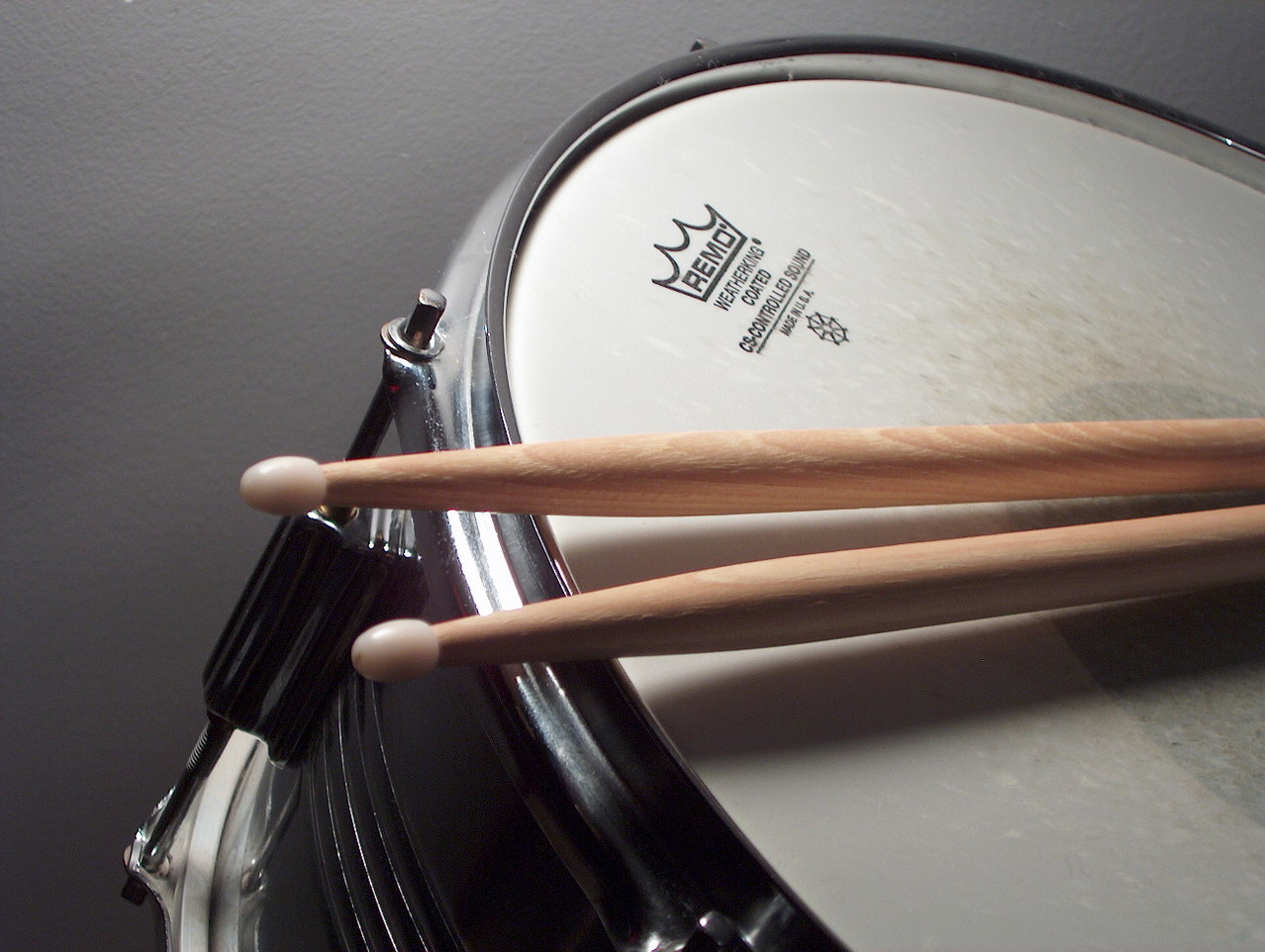
Drill dance is a synchronized style based on military drills that focuses on precise movements, straight lines and sharp transitions to music. Another Bad Creation uses a live drum team to create the music for its routines.

On Tuesday, 16 of the team members performed, with guidance from Morgan, at the Hartford Community Garden on Niles Street to a crowd of approximately 30.

But it’s their own event that the drill-and-drum team is most excited about.

Tonight at 7, Another Bad Creation hosts Drill-O-Rama, a drill dance competition at Ron-A-Roll in Vernon.

So far, five teams are competing for a cash prize. (Second- and third-place teams receive trophies.) Each team of 25 that enters the competition pays $50; spectators pay $10.

PLANS TO TRAVEL

The ABCs hope that the money raised will cover the costs of future competitions in Connecticut; the big goal is to send the team to a competition in Ohio in August, which will cost $10,000.

“I really want to take them out to see what’s going on elsewhere, not just here but competitions around the world,” Morgan says. “I have to get them out of here. If they stay here, all they’re going to learn is what they see. We want to do something positive for them.”

Though they’ve been trying to raise money through bake sales and car washes, people haven’t been responding as positively as Morgan had hoped.

“I don’t get it. I really don’t get it,” she says. “I don’t have time for politics; it’s about the kids. So we’re pretty much on our own, and we get what we get. I would love to have some sponsors that aren’t about politics.”

They have gotten some help from the Hartford Community Center and its executive director, Deborah Garner, who provide the team with a space to practice and help with expenses, when possible. “They take care of us as much as they can,” Morgan says.

Natalie Ruff, one of the team captains, says, “Even though we’re basically an independent team, we need help from our community, too, because that’s who we represent.”

To make the Hartford community proud, the drill dancers, ranging in age from 10 to 24, practice six hours a week during the school year, 20 hours a week in the summer.

The routine and music changes for each competition. Thornton, another team captain, does most of the choreography.

“Sometimes I’ll just start dancing, and if everybody likes it, we’ll put it in the routine,” Thornton says.

The drum team is a crucial component, too. Led by Harold Ortiz, the drummers provide the beats for the drill team (and also perform alongside the drillers).

“I’m in charge of the whole percussion section, all the beats, all the rhythms, everything,” he says. “But I don’t do it all by myself. Everyone helps, too.”

IT’S SHOW TIME

By now, it’s nearly 6:30 p.m., and it’s time for the team to perform.

“Our crowd’s about to die down,” Thornton announces. “Let’s go.”

And like that, the team gets in position and launches into its routine, moving with confidence and power in sync to the beat of the live drums and cymbals.

The crowd enthusiastically cheers, dancing and clapping along for the 20-minute performance. When the group finishes – slightly out of breath, but laughing, smiling and celebrating a job well done – Morgan says, “I love my team.”

Another Bad Creation isn’t her first, though. She’s coached three teams before and started drilling when she was 7. She got into coaching at 15.

“I loved everything about drilling: the arts, the discipline, everything,” Morgan says. “I was a DCF child. To me, that was my family. Everything that they gave me, I wanted to give back to my community, to the kids who went through what I went through in life.”

As a coach, she’s taken in a lot of kids, feeding, dressing and caring for them.

“I didn’t want them to go through what I went through,” she explains.

Morgan continues to pay for transportation costs and registration fees out-of-pocket despite the fact that she coaches for free.

She says simply, “This is what I do. It all goes back to everybody wanting to give back. We do what we’ve got to do. I love it.”

Published in Hartford Courant

The Ice Man Carveth: Ex-Chef Now Serves Up Frozen Artworks

Bill Covitz spends his days inside an 18-degree warehouse freezer wielding a chainsaw.

As an ice sculptor running his own Waterbury-based business, Ice Matters, with his wife, Jen, Covitz says working inside a freezer is crucial.

“Other ice sculptors carve outside, in the shade. They can’t imagine carving in the freezer,” he says. “I can’t imagine not.”

As a former chef, Covitz specialized in French cuisine and traveled around the United States, Belgium and to France.

Fine dining “was about how beautiful you could make the plate,” he says.

As a chef, he often was asked to create ice sculptures to accompany his food, and, says Covitz, “I fell in love with it.” Over the years, he’s gone beyond decorating tables with his ice creations to competing in national and international contests.

In 1996, Covitz began to carve competitively and went on to become the 2004 champion at the National Ice Carving Association’s competition. He took a break to focus on his family (he and his wife live in Cheshire with their two boys, Liam, 8, and Joshua, 3) and to run his business before returning to competitions in 2006.

Covitz will compete next at the Lyman Orchards Winterfest during the circus-themed “Ice Wars” challenge Feb. 26 and Feb. 27.

Covitz, whose mother and grandmother were both painters, now can make everything from a corporate logo and a pterodactyl with a 12-foot wingspan to a dainty shot glass with ice. Most recently, he’s done a martini glass that holds two quarts of liquid and has a working spigot as well as a life-size ringmaster.

To carve, Covitz uses various tools. The chainsaw shapes the basic structure; the angle grinder smoothes the cuts, much like a sander; the die grinder, used like a pencil, creates small curves and details; the iron and large handsaw adhere two pieces of ice together; and the torch, used last, smoothes the ice and makes it clear as glass.

But his favorite tools are his assortment of large, medium and small chisels, which he keeps sharp enough to effortlessly slice through ice.

“A lot of people don’t use chisels anymore; they’re all about power tools,” he says. “I still like them a lot, so I use them often.”

While carving in his studio, Covitz – always bundled in a winter coat, snow pants, boots, gloves and a hat (but no goggles, which he says would instantly fog up and obstruct his view while working) – tends to “jump all over the piece” with the tools, he says.

The power tools that he uses produce a blanket of ice dust that clings to his clothing. (“The worst is when ice gets in between his gloves and his skin,” he says.) He eventually removes it with an air blower. The ice and snow that accumulate on the ground are eventually removed with a shovel.

“It gets a little tiring, especially in the winter,” he says. “You get used to it.”

SELF-FULFILLMENT

Looking forward to next week’s contest, Covitz says, “I want it to be a good competition. I compete for myself. That’s where it breaks up the monotony of the everyday grind. I can come up with my own piece. That’s where I get my real fulfillment.”

Though he competes less now than he did before, Covitz does plan to get back into it within the next year, he says.

He recently returned from Norway’s annual Ice Music Festival, which he’s participated in for six years. He got involved after musician Arthur Lipner asked for his help creating an ice marimba for the event.

“I do a lot of repetitive sculptures for weddings and things like that, so I was really intrigued by this,” he says. Since then, Covitz created an ice stage in 2010 and several working ice instruments each year, including a flaming guitar.

As for what Covitz looks for in an ice canvas, it’s clarity, he says. He owns several specialized machines – at $6,000 each – that make the clearest ice possible. Each machine produces four 300-pound clear blocks per week.

How does Covitz feel knowing his art will eventually be a puddle?

“It’s good and bad. There is something special about it. It shows that this sculpture was personalized for you, even if it’s just a swan for the wedding,” he says. “The fact that it melts away is proof that it’s made just for you.”

Published in Hartford Courant

Toasting 80 Years of Magic Moments at The Bushnell

“I tell people, ‘When I die, I either want to be in bed, with all of my family around, saying farewell, or I want to lie down in the aisle and look up at the ceiling at Mortensen Hall at the Bushnell,'” said Alan Schwartz of Avon. “That, to me, is one of the most beautiful, beautiful venues I have ever been in, and my dear, I have been around.”

Schwartz, a former theater professor, director and actor, was first introduced to the Bushnell Center for the Performing Arts in the 1940s. He worked there as an usher with close friend and future famed director, actor and comedian Charles Nelson Reilly, who grew up in Hartford.

Like many, Schwartz fell in love with the theater and is one of the more than 200 people who are helping the Bushnell — which opened on Jan. 30, 1930 — celebrate its 80th anniversary season.

To do so, the theater solicited memories as part of its “Tell Us Your Story” campaign. The submissions told various stories: of a 10-year-old boy receiving a subscription to the Travel Series from his grandmother; of a husband and wife meeting during a performance of “Wicked”; of a woman accidentally running into President John F. Kennedy after his speech at the Bushnell Memorial in 1961.

Those who shared their stories — which may be used in Bushnell publications, on its website or in displays throughout the building — were invited to an anniversary celebration Saturday from 10:30 a.m. to 1:30 p.m. It included a free concert by the Ensign Darling Vocal Fellows and a backstage tour.

Schwartz was looking forward to celebrating the place where he and Reilly spent a great deal of time.
“The Bushnell, on an artistic level, is not only Hartford, but it’s what Hartford ought to be and should ascribe to be,” he said a few days before the event. “It’s every blessed thing that the arts were meant to be.”

There, Schwartz witnessed what he calls magical performances (he sometimes worked as an extra), everything from “Showboat,” “Faust” and “Aida” to magician Harry Blackstone to the Shrine Circus, complete with elephants and horses.

“What the Bushnell did for me was it planted a flame in my identity. It was the flame of appreciation for the beauty of the arts,” he said.

Rosemarie Swiatkiewicz from Wethersfield first visited the Bushnell as a child to see an opera with her school. It wasn’t until 1980 that she returned for a show hosted by Sammy Davis Jr. for the Greater Hartford Open.

In 1987, she and a friend became season ticket holders.

“We both love Broadway,” she said. “We get to see some fabulous shows with first-class talent, and it’s right in your backyard.”

It was at the Bushnell that she saw “Guys and Dolls,” starring Lorna Luft, Judy Garland’s daughter.

“Just before the curtain went up, they brought in Liza Minnelli. She came in and sat a couple of rows in front of me to see her sister perform,” Swiatkiewicz said. “I thought, ‘I really do have good seats.'”

For Marilda Gandara, former member of the Bushnell Board of Trustees, the Bushnell holds sentimental value.

Though she visits the theater often (last weekend, she and her husband went to see “Hair”), it was in 2000 that her fondest memory occurred.

At the time, her father had cancer. Gandara took him and her mother — both of whom had migrated with her from Cuba in the 1960s — to see “Ragtime.”

She found the story line particularly moving, about a Latvian Jewish immigrant named Tateh who had moved to America with his young daughter.

“I knew this was the last time I would be there with my father because he was already close to dying,” she says. “It was such a powerful experience to be there with him, to see this play, where this man just takes the little girl by the hand, and they plunge into life in America.”

Tateh and his little girl experienced the difficulties of adjusting to live in a new country, much like Gandara’s family.

“To me, it was so incredibly moving to be watching this. It really felt like it was my dad and me up on stage,” Gandara said. “I’ve never forgotten it. I was grateful to the Bushnell for providing the place where this magical experience happened for me and my dad just before he went away.”

Published in Hartford Courant

Historian Unravels A Killer Story; Long-Overlooked Conn. Case Was First Mass Murder

It’s Feb. 3, 1780, on the cusp of midnight. Outside, it’s snowing. The Mallorys, like most of the residents of Washington, Conn., are asleep in their bedroom. But 19-year-old Barnett Davenport, the family’s farmhand and boarder, is not. In one hand, he holds a swingle, a wooden instrument he uses each day on the Mallory farm to extract flax fiber for linen production.

The candle in his other hand is the room’s only light.

He stands next to the bed where Caleb Mallory lies sleeping. Beside Caleb, in a separate bed, his wife is sleeping with their 8-year-old granddaughter.

Davenport swings. The wood makes contact with Mallory’s head. There’s screaming, panic. Mallory knocks the candle from Davenport’s hand, and it hits the ground, making the room now dark. Davenport continues to attack, first Mallory, then Mrs. Mallory, then their granddaughter. He doesn’t stop, not even when the swingle splits and he has to change weapons, grabbing the musket beside their beds. He thinks they’re dead.

Down the hall, the Mallorys’ 5- and 6-year-old grandsons are startled by the noises. Davenport tells them everything is all right. He puts them to bed and proceeds to loot the home.

And then, a groan from Caleb Mallory in the bedroom. More swinging. Then silence.

Davenport changes out of his blood-soaked garments and into some of Mallory’s clothes. He lights several fires throughout the premises. Then he leaves the house, the bodies and the two live children to burn.

It’s America’s first known mass murder, a case that has intrigued New Milford historian Michael-John Cavallaro.

The Research

After nearly three years of investigation, Cavallaro, author and vice chairman of the New Milford Conservation Commission, will be sharing the details of this gruesome night with the public Tuesday. He stumbled across the murders while researching his first book, “Tales of Old New Milford,” and returned to it while writing his latest book, “Slavery, Crime and Punishment on the Connecticut Frontier.” He has since written a screenplay about the murders and Newgate Prison.

Although uncovering the details of the 1780 crime proved to be challenging, Cavallaro eventually discovered the only surviving copy of Davenport’s 14-page confession, published later that year. With the help of curator Stephen Bartkus at the Gunn Historical Museum, Cavallaro was able to view a microphage file of the document.

“The tale that this [confession] told was just phenomenal. For the first time, I knew that I had the truth,” says Cavallaro.

The confession was not written by Davenport, who was illiterate, but most likely transcribed during Davenport’s jail time by the “very well-known and much-loved” Rev. Judah Champion of the First Congregational Church in Litchfield, says Cavallaro. It didn’t simply detail what had happened that night. It also explained the history of the 19-year-old killer.

The Murderer

Described as a “career criminal” and “sociopath” by Cavallaro, Davenport was born and raised in New Milford. He had three brothers; two were older, and one, named Nicholas, was younger.

“He had a very, very tough childhood,” says Cavallaro. Davenport’s father ran an ironworks and offered his son out as a farmhand from the age of 7 or 8. He didn’t have an education and eventually picked up what Cavallaro calls “bad habits.”

By 15, Davenport was guilty of robbery and horse thievery and had already contemplated murdering his employer, a farmer. At 16, Davenport enlisted in the Massachusetts military under the name Bernard, an alias, which he was prone to using throughout his lifetime, says Cavallaro. He deserted, then joined a militia and deserted again.

He eventually ended up in Woodbury, where he met Caleb Mallory. Seeing Davenport dressed in rags, with nothing in his pockets, Mallory invited him to work for his family.

“They took him in. They felt sorry for him. They gave him a job,” says Cavallaro.

A little more than two months later, after spending hours using a swingle to help with the family’s linen production, Davenport decided to use the tool to murder the family.

The Arrest

Although Davenport looted the home, Cavallaro says it was an afterthought and not the motive.

“He tells you right in the confession that his mind was just obsessed with the thoughts of murder and that he had set his mind on murdering [them] five or six days earlier,” he says. “Clearly, this is a very, very disturbed man who has gone from being a sociopath to a psychopath.”

Davenport set the house on fire, with the live children inside, hoping the fire would cover his tracks, says Cavallaro.

It didn’t.

When the police found only five bodies in the rubble of the Mallory home, they sent out a search party that eventually found Davenport in a cave in Cornwall.

“At the point of capture, he said he had an accomplice,” says Cavallaro, who suspects that Davenport was simply trying to lessen his punishment.

But when Davenport was taken to Newgate Prison and realized that his younger brother, Nicholas, had been arrested because Davenport had been using his name, “he recants the statement” about an accomplice, says Cavallaro.

The Mallorys knew Davenport as “Mr. Nicholas.” He had stolen his brother’s identity, says Cavallaro, leading the police to arrest them both.

Although Nicholas had nothing to do with the murders, Cavallaro says the brother remained imprisoned because he knew that Davenport had abandoned the army.

“Had Nicholas turned his brother in, then the murders may not have happened,” he says.

Nicholas, then 17, received 40 lashes and was sentenced to life in prison. He spent two years at Newgate before being released under the condition that he would stay in New Milford for the rest of his life. He died a pauper at 58.

Davenport also received 40 lashes. He was hanged on May 8, 1780.

“The number of victims goes on and on and on. Nicholas is a victim. The parents of the lost children? They’re victims. Caleb Mallory’s seven adult children? They’re victims,” Cavallaro says.

The Aftermath

“From farm to farm to farm to farm, this story spread like wildfire,” says Cavallaro. “Up to that time in 1780, nothing like that had ever been heard of before. It was just a shocking, shocking, shocking tale.”

While researching the murders, Cavallaro was initially unfazed. It wasn’t until Cavallaro read the confession that he was affected, particularly upon discovering that the Mallorys knew Davenport as Nicholas.

“That was it. That was where I felt like I was suddenly kicked in the stomach. I was depressed for several days. The reality of it all truly, truly sank in,” says Cavallaro, who drives by the site of the murders on his way to work most days.

The most haunting line of the confession, says Cavallaro, “sent chills up my spine.” He named his lectures after it: “A Night Big With Uncommon Horror.”

Cavallaro’s lecture is at 7 p.m. tonight at New Milford Town Hall, 10 Main St. He’ll discuss the murders, his research process, his reaction to the story and a screenplay he’s written based on the crime.

“The average person today thinks of the Colonial person as being humble and pious and Puritan-like,” he says. “But really, we’re no different now than then.”

Published in Hartford Courant

Steve Almond Explains Why ‘Rock And Roll Will Save Your Life’

Author Steve Almond chronicles his obsession with music in his latest book, “Rock and Roll Will Save Your Life: A Book By and For the Fanatics Among Us (With Bitchin’ Soundtrack)” (Random House, $23), due out April 20. It delves into the impact that music has on everyone’s life, especially those whom Almond dubs “Drooling Fanatics.”

“Drooling Fanatics,” according to Almond, are fans who have amassed thousands of CDs, worship musicians and spends hours dreaming of being a rock star.

His previous books include “(Not That You Asked),” “Candyfreak,” “The Evil B.B. Chow” and “Which Brings Me to You.”

We spoke with Almond, who appears at Real Art Ways Friday, about his newest book and just how rock and roll can save a life:

Q: At what point in your life did you realize that you were a Drooling Fanatic?

A: Here’s the thing: I think everyone on Earth would just love to be a musician. … So, in a sense, identifying yourself as a Drooling Fanatic is kind of like admitting that you’re a loser who can’t make it in music. It took me until I was 42 to [realize] I’m not going to be a rock star, and 99.9 percent of us are not going to be rock stars. We’re going to be Drooling Fanatics. We’re going to be people who are able to feel the feelings that music is there to allow us to feel. That’s something in and of itself that should be talked about and honored. If I look back now, I would spend hours waiting for the DJ to play “Undercover Angel.” … When the DJ finally played that song, it was like God kissing you on the mouth. That was clearly symptomatic of my Drooling Fanaticism. … It’s taken me this long, though, for me to get over the fact — or try to get over the fact — that I could never make music, which is, to me, the dream.

Q: How do you think your life would have been different if you could have lived your dream of being in a rock band? Do you think you would have liked your life more?

A: [Musician] Dana Kurtz says at the end of the book, “Look, man. The fact that you’re a fan allows you to enjoy music in a way that you wouldn’t. It wouldn’t be as pure if you were a musician. It would be more complicated.” She’s probably right about that. People imagine that I just love writing, that it gives me great joy. But I have to break it to them: No, I have a very conflicted relationship with writing. It makes me feel guilty all the time, full of doubt, like I’m not really good enough, that nothing’s ever going to be good enough, and why’d I get involved with this? Maybe that would have just been the way it was with music. Maybe I would have just felt as miserable and conflicted about that stuff [as a musician]. Then there’s another part of me that’s like, “Are you kidding me, dude? I would have loved it!” … I don’t know, exactly, but I fantasize.

Q: Listening to music is a sensory experience. Was it challenging for you to articulate your feelings about music on paper?

A: Yeah! There’s a whole chapter of the book that’s about how you can’t really write about music. Even if you could describe it perfectly, that’s not the same as hearing it. Even if you could somehow get across how it feels to listen to music, that’s just how it feels for you to listen to that music at that particular moment in your life. Music is such an immediate, personal thing that’s happening. It’s totally intuitive, and it’s so emotional. The whole point of music is that it’s what you do when words aren’t enough.

Q: In the book, you give examples of someone writing technically about music and the experience of music. Is there even a point in reviewing music?

A: I just wrote a piece for The Boston Globe that was basically saying that I don’t really see the point of music criticism. … For me, as an avid Drooling Fanatic, I can try to write about what it felt for me to hear a particular band or song and what it was like. That chapter [in the book] about Nil Lara is me trying to capture the way that this guy’s music made us all feel. I’m trying to describe a little bit about how it sounds, but a lot of it is really how it felt for us at that time. I hope that that connects with other people who listen to a band and experience a moment in their lives where everything felt big and hopeful. … [Concerts] are primal. People need it. They come together. Our culture keeps people very far apart, locked in front of our own little screens. That’s why when I read at Real Art Ways, there’s going to be music in the background most of the time. When a song is invoked in the text, for the most part, it’s going to be played, and the crowd’s going to be able to hear some of it. That’s what people want, and that’s what people need. It’s got to be a party. I want people to hear the songs and feel some of the things [I’m talking about]. I want them to hear “Sweet Home Alabama” and, like me, feel like, “I love the South. I want to be part of the South. I want to have my kin [there]; I want to go see the swamp. Hell, yeah!” That’s what music does: It puts us all in the same place. It makes us imagine that we’re all the same people.

Q: Lots of literary critics spend their time talking about the rhythm of writing and comparing it to music. If you could classify your writing as a musical genre, what would it be?

A: That’s tough. … I’m not a poet, so I’m not a hip-hop guy. … For me, I can say that I know what I’m interested in, which is I’m interested in getting my characters, whether it’s me or a fictional character, in lots of danger. I’m interested in sort of slowing down when things get really dangerous and the emotions become complicated and conflicted inside. For me, that’s where the language does really rise up into the lyric register, where the sensual and psychological details start to compress, and the language feels more lyric — more like poetry, where the rhythm and euphony of the language comes out. I don’t know what genre that would be. I think the way I would say it is the kind of music that I write about in this book is like the kind of stories and essays that I want to write. I want them to be that emotional. They might be emotional in lots of different ways, sometimes in the get-your-ass-on-the-dance-floor-and-shake-it kind of way, and other times it’s crying-because-life-is-so-miserable-and-just-wallow-in-that-delicious-misery kind of way. But I want people to feel. That’s the kind of music I like, the kind that wears its heart on its sleeve.

Q: Nearly every chapter includes an interlude that is related to the chapter topic but is a bit of a digression. What made you decide to include these?

A: I just tried to put together a book that would be sort of cool, and I wanted to have chapters that were about bigger things and then, within those, I wanted to have something to break up the subject a little bit. It’s a digression, but it’s, I hope, related. … I want people to be able to skip around in the book and see whether they’re going to like this, that and the other. It’d be great if they wanted to read from the first word to the last, but I’m cool with them skipping around. We’ve got CDs that we now can skip around on, listen to Track 13 because we like the title or we saw it on a TV show or something. That’s just fine, and hopefully those interludes and chapters have enough internal integrity that you don’t have to read them in order in order for them to make sense.

Q: How was writing this book different from writing your other books, if it was at all?

A: This one was a lot like “Candy Freak” in that I was writing about an obsession. [This book] got an angle that was just trying to be funny — maybe succeeding, maybe failing, but trying to be funny. There’s a memoir part of it. There’s a cultural commentary part of it, and then there’s some reporting that’s also mixed in there. I like books like that, that are lots of different things mashed together. That’s the way “Candy Freak” was. I wanted to write a book that was not the standard, neat, between-the-margins kind of book. In that sense, it was tough to write because initially, it was so skewed toward me being a Drooling Fanatic. … It became much less Drooling Fanaticky by the end of it. I’m glad about that. I think it’s a book that has a broader appeal and isn’t just for those 5,000 of us who worship Chuck Prophet or Joe Henry. I hope, anyway, that this book is just for anybody who’s ever needed music to get to their true feelings.

Q: How can rock and roll save a life?

A: How can it save your life? One song at a time. That’s a little bit of a glib answer, but it really is true. Everybody out there knows that, at some terrible time in their life, they’ve needed music to make it through — and, in fact, more than once. Probably a million times. … That’s what songs do. They allow us to experience our real, actual feelings that make us genuinely alive.

Published in Hartford Courant

Smart Girls Do it Well: Young Women are Excelling in STEM

Women currently earn 41 percent of PhDs in STEM fields – that is, science, technology, engineering, and mathematics – but make up only 28 percent of tenure-track faculty in those fields, according to a 2011 report published by the Department of Commerce. That same report says that women hold less than 25 percent of STEM jobs in the U.S., despite filling nearly 50 percent of jobs in the current job market, and that women hold a disproportionately low share of STEM undergraduate degrees, particularly in engineering.

There are plenty of reasons why, including gender stereotyping and a smaller number of female role models in STEM fields. But one factor lies with how young girls are frequently discouraged from pursuing studies in STEM subjects.

Despite that, many girls are becoming increasingly interested in STEM subjects – thanks in part to the efforts of organizations like CWEALF that develop entire programs to encourage their studies – and it shows.

Young women across the U.S. are developing apps, inventing technological advances, and even working on diagnosing certain types of cancer. Here are a few admirable young women who have used science, technology, engineering, and math to make headlines.

Eesha Khare

More than 1,600 finalists from 70 countries around the world entered the 2013 Intel International Science and Engineering Fair in Phoenix, Arizona. The fair – the world’s largest international pre-college science competition – is geared toward students in grades 9-12. This year, out of the massive collection of entries, Eesha Khare, an 18-year-old student at Lynbrook High School in California, was selected as the competition’s winner.

Khare invented device that can charge a cell phone between 20 and 30 seconds. According to Huffington Post, the “supercapacitor acts as an energy storage device that holds a great amount energy in a small amount of space.” So not only does it have the ability to charge phones with incredible speed, but the device is small and could fit inside of cell phones and other electronics. This innovation could ultimately make it so that we’ll eventually rely on electronic outlets less often.

For her work, Khare won $50,000, which she said she will put toward her education at Harvard.

“I will be setting the world on fire,” she said.

Brittany Wenger

Sarasota, Florida, student Brittany Wenger recently developed a computer algorithm to diagnose leukemia. Pretty big deal, no?

The 18-year-old “built a custom, cloud-based ‘artificial neural network’ to find patterns in genetic expression profiles to diagnose patients with an aggressive form of cancer called mixed-lineage leukemia (MLL),” according to Mashable.

Her invention could change the face of cancer – or, at the very least, mixed-lineage leukemia, which typically has a poor prognosis, with a five-year survival rate of only 40 percent.

And this wasn’t even Wenger’s first foray into scientific discoveries: she previously used artificial-intelligence technology to determine whether a breast mass was malignant or benign. It was called Global Neural Network Cloud Service for Breast Cancer.

Other instances

Wenger’s breast cancer research garnered her grand prize at the 2012 Google Science Fair, which annually collects more than 10,000 entries from young people ages 13-18. She was just 17.

The year before, in 2011, girls swept the competition, a feat Fast Company celebrated. Shree Bose, a 17-year-old girl Texan won the grand prize for her research on the chemotherapy drug, cisplatin; Naomi Shah of Portland, OR, won the age 15-16 category with a study of the effects of air quality on lungs (particularly for people who have asthma); and Lauren Hodge of York, PA, won the age 13-14 category for research on whether marinades reduce the amount of cancer-causing compounds produced by the grilling of meat.

The efforts – and the impact – of these young women cannot be understated. Gone are the days when words like “doctor” and “scientist” and “engineer” are synonymous with male; instead, young women like Eesha, Britney, Shree, Naomi, and Lauren are rising. These girls, like many others when given the right tools and encouragement, are determined, innovative, and smart. So let’s keep pushing young women to think big. When they’re encouraged to study science, technology, engineering, and math, there’s really no telling what they’ll do.

They might just change the world.

Published in CWEALF

Perfect Pup Finds Happy New Home

I got a dog. I woke up Monday, not responsible for anything but myself, and then I went home, dog in arms (and dog crate and dog bed and chew toy and leash and… you get the picture) wondering if the dog was really mine. It’s not as if he magically materialized or that I’d never given any thought to getting a dog. Quite the opposite, actually.

My boyfriend, Bill, and I had been searching for the perfect pup for months. But none ever seemed right. This one’s too expensive, this one’s too far away, this one requires us to prove that our apartment will allow us to have a dog and – oops – that’s against our apartment complex’s rules. (Minor technicality, right?)

When I got into work Monday morning, I got a phone call from a town employee asking if we’d received the emails from the Plainville Dog Pound. Not unusual, as the paper often runs photos of dogs and cats who need to be re-homed. I checked the inbox, distracted by the laundry list of things for me to do, and confirmed. We hung up.

Then I saw them.

Three, white, cuddly puffs of fur. At least that’s what the four-month-old Maltese pups in the photo looked like. I think I squealed (by now, my coworkers are quite used to my enthusiastic outbursts, like the time our sports editor, Nick, witnessed me nearly kill the printer) and then I kept squealing because I suddenly felt like I needed one of these dogs.

A few phone calls and several hours later, I was heading to Plainville from our Meriden offices with Bill to see if we jived with any of the dogs.

The whole way there, I was so excited, I felt ill — something I hadn’t experienced since I was 11 and about to board my first plane to Disney World.

Animal control officer Gabby Paciotti (who is a doll) let us inside and we saw them: the furballs.

“I’ve gotten so many calls about these little guys,” Gabby said. “I even came in work early myself so I could play with them.”

I couldn’t believe how cute they all were and I wondered how we’d ever choose.

But as two of the dogs rushed to us and vied for our attention, jumping and yipping and licking, one hung back, a little timid and shy.

“I think that’s the one,” Bill said, scooping him up. The dog rested his head on his potential new owner.

Yep, we were sold. We signed the paperwork, gave Gabby a hug and then that was it – we were suddenly parents to a tiny fur-baby that we named Obi-Wan Kenobi (yes, after the “Star Wars” character). Obi for short.

“Is this real?” I asked Bill, when he passed the dog to me so he could drive us home. I leaned down to Obi. “Are you real?”

He licked my face and snuggled into the crook of my arm as if to say yes.

That feeling of being so excited I felt ill subsided in me, but, apparently, it rose in Obi, who promptly got sick all over my lap.

When I realized I loved him anyway, I knew it was a good fit.

Welcome home, Obi. We’re so happy you chose us.

Published in Record-Journal

The Truth About Millennials: We’re Broke and Bitter

If I read one more “trend piece” trying to analyze “millennials,” I’m gonna scream.

  • This story says millennials are so unable to stand on their own, they can’t stop texting their parents.
  • This one says millennial women aren’t interested in having high-powered jobs.
  • This one says millenials want nice things without having to work for them. (A description of literally every person who has ever existed.)
  • And, of course, there’s the infamous Time Magazine piece that calls millennials the “me, me, me” generation.

There are articles talking about how millennials constantly need praise, how they have no self-motivation, how they are lazy and only concerned with having fun, how they are materialistic, and how each one of them believes they are a special little snowflake.

Are there young people who embody some of these characteristics? Sure. But there are also people of all ages that fit these descriptions, too. These behaviors are not unique to young people, nor are they unique to one generation.

But that doesn’t make for an easy-to-write “trend” piece.

Sometimes young people seem “scary” to older generations because they’re so different. In the 1960s, young people who became “hippies” were going to be the downfall of the U.S.; today, those “hippies” are talking about how young people today are really going to be the downfall of the U.S., the end of society as we know it.

But the truth is this: millennials are far less spoiled, narcissistic, and egotistical than most news articles would have you believe. In fact, many of us are just poor, bitter, and frustrated.

Why we’re poor

Some argue that millennials are too frivolous with their money, and that is why they are in so much debt. We buy too many iPhone cases! And iPads! And clothes!

Yet the reality is that we are saddled with crippling amounts of debt, with no job prospects.

According to a report released by Bloomberg, college tuition and fees over the last 30 years have increased 1,120%. From 2008 to 2010 alone, AP reported that college tuition had increased by 15%.

But federal minimum wage – what most college students are earning, since many companies won’t pay more than that without the employee having a full, four-year degree – is a measly $7.25 an hour.

To paint a picture: in 1978, college tuition, on average, cost $2,411 annually. In 2011, it was $18,133, a 652.095% increase. Meanwhile, minimum wage has only seen a 173.585% increase in that same time frame (going from $2.65 in 1978 to $7.25 in 2011).

Today, if someone made $7.25 an hour, and they were attending a four year college (so, their debt would be $72,532 total), they would need to work 10,004.41 hours. Those hours, divided by 4 years (that you are away at college) and that’s 2,501.10 hours a year. Divide that by 52 weeks in a year, and college students would need to be working 48.10 hours per week (no vacations or sick time) in order to pay off their loans by the time they graduated.

For most of us, that’s completely unrealistic. College in itself is a full-time job. So we take out loans with horrible, awful interest rates to pay for our education now, in hopes that our hard work will pay off financially later.

After college, if we’re lucky, we get a job — but our loan payments are so big, it isn’t much of a life. And the interest rates? Well, the interest rates on federal student loans recently doubled from 3.4% to 6.8%, while private lenders can charge astronomical rates like 18%. It makes it hard (sometimes impossible) to afford anything else.

Why we’re bitter

As kids and teens, we were promised a bright, shiny tomorrow. We were told we could be whatever we wanted to be. This is where some shake their fists and say, “See?! That’s what’s wrong with you guys! You were all coddled!” Well, sure, maybe we were. But I don’t think most of us had unrealistic expectations. We were told college was the only way to get a job, and those jobs, if we had a degree, would be guaranteed.

Unfortunately, there are too many of us, and too few jobs.

That doesn’t stop our student loans, though. We’ve got six months from the time we graduate until we need to start paying them back. Depending on how many loans you took out, you may have several different payments to juggle (my boyfriend’s payments, consolidated, total $600 each month – we could be renting an extra apartment).

We sign up for these loans when we’re bright-eyed and bushy-tailed 17- and 18-year-olds. I’m not saying when you’re that age you’re stupid, but no one tells you just how much of your life you’re signing away – and at an age where you can’t even drink. So 17- and 18-year-olds are not responsible enough to hold alcohol, butare responsible enough to determine if $100,000 in debt upon graduation is a good idea.

Why we’re frustrated

Nothing is changing, and it feels like everyone blames us. On a day to day basis, we may hear any of the following statements:

  • When I was in college, I just worked a summer job to pay off my student loans.
  • I can’t believe you’re still living at home. Don’t you have any ambition?
  • Mooching off mom and dad, are ya?
  • When are you going to get a job – a real job?
  • It’s not that bad out there.
  • If you couldn’t afford an education, you shouldn’t have gone to school.
  • When are you going to start acting like an adult?
  • If I were you, here’s what I would do…
  • Grow up.

Our future feels grim. Social security will run out before we can retire. We’re earning way less money than before. We got kinda screwed. Most of us are struggling to pay our monthly debts and, if we are able to, there’s little leftover. We’re sometimes forced to either stay living at home or to move back there – something we often do with our tails tucked between our legs.

It feels like we’re failing.

Even though this was just the life that was handed to us.

Why we’re going to rise above

For one thing, not all of us are in dire straights. If you’re one of the lucky ones to have a great job and to be out on your own, that’s fantastic.

On top of that, millennials are smart. We are strong. And we will do great things. We are already are. Millennials are “confident, self-expressive, liberal, upbeat, and open to change. [We] are more ethnically and racially diverse than older adults. … [We] are on track to become the most educated generation in American history. … [Our] entry into careers and first jobs has been badly set back by the Great Recession, but [we] are more upbeat than [our] elders about [our] own economic futures as well as about the overall state of the nation.” (All this, according to research done by Pew.)

Misconceptions aside, we’re doing okay. Not fantastic, not wonderful — but okay. We’re doing what we can with what we’ve got.

Someday, when we’re older, we’ll join the ranks of those who came before us and wonder if the next generation will be the end of society as we know it.

Until then, if we’re lucky enough to have some extra cash, we’ll sip our Starbucks and treat ourselves to the latest iPhone. We deserve it.

Published on Positively Smitten

How to Deal With Being Laid Off From Work

I’m just 25, but I’ve already been laid off from a job. To be fair, it was a newspaper job, which means I’m in really good company — newspapers are dying and blah blah blah. (In fact, a recent article said journalism is the worst plan of study for college students.) For me, it was a “dream” job, a career, a place where I’d scored a no-pay internship that morphed into a freelance gig that turned into a full-time job offer. It was my first “big girl” job and I was totally and completely smitten.

And then I got the axe. It wasn’t something I had emotionally prepared for, mostly because I figured if anyone was going to be cut, it wouldn’t be me — the one who was undoubtedly paid the least amount of money but was teaching literally everyone in the newsroom how to use this new-fangled thing called “technology” with every spare moment.

It happened quick, which I’m thankful for. One minute I was writing an article; the next moment I was in HR being told it was over and no, I couldn’t go get my purse before I left, and yes, I would be escorted out by security. They said it wasn’t because of my work and it was nothing personal, but shit, it sure felt that way.

We were breaking up, the newspaper and I, and I’d been skipping along happily, buying us dinners and getting his name tattooed on my shoulder and looking at him lovingly, adoringly, thinking we’d totes be together forever. But the newspaper was secretly plotting ways to dump me, all the while masking happiness and using me until he decided he was done.

I was as blindsided as if it HAD been a real break-up. I could do nothing but bow my head, try to make a gracious exit (difficult when your nose is all red and your makeup is trailing down your face and you feel like melting into a puddle of nonexistence) and move on. Only moving on wasn’t exactly something I could fathom, at least, not at that moment in time. I was a mess, I was broken, I was sad, I was depressed. I felt useless. I felt like a failure.

Those feelings didn’t dissipate for a long time. Sometimes, when I think really hard about it, it still stings just a little. But I survived. I’m onto job number two post-break-up with Newspaper, I’m making more money than ever before, I’m freelancing, I’m volunteering, and things are good.

But lord knows it took me a really long time to get there.

So if you’ve ever been laid off, if you may be laid off in your future, or if you’re currently laid off now (all of which I hope are not true), here are a few things to know.

1. It’s not you, it’s them. Usually, anyway. With how abysmal the economy is these days — with budget cuts and failing businesses and a long, uphill battle to success — most companies simply can’t afford to keep people on payroll. That was the case for me. I was given the boot alongside 30 or so others, many of whom had been working at the company for decades, and who were among the most dedicated, hard-working individuals I’d ever seen. They weren’t let go because they were bad at their job or because they were failures; they were let go because the business world is vicious.

2. You’re not alone. It hardly helps, I know, but you aren’t the only one who is or has been laid off. Take comfort in that fact. It’s not personal, my love. It just is what it is.

3. Sign up for unemployment/benefits right away. Don’t waste a moment, and there is absolutely NO shame in this. Unemployment, welfare, whatever — these things are there precisely for situations like this. Take advantage of them. They will help you. And speaking of, when you’re feeling up to it, look into some of your state’s resources. Many will have advice about breaking back into the workplace. Until then…

4. You are not a failure. It feels like you are, but you’re not. This was something bigger than you, and is often in no way a reflection of your performance or your skills.

5. It’s okay to mourn. Losing a job is a bit like losing someone you care about. There is this feeling of loss, of restlessness, of hopelessness. It may feel dark. You will probably be very sad. That’s all okay.

6. It will feel surreal. For a while, anyway. I got let go on a Thursday. After hours of sobbing, suddenly I just went about my regular Thursday evening routine. I prepared dinner for my boyfriend and I. We watched our evening shows. We relaxed. We went to bed by 11. The next morning, I woke up, ready to tackle Friday — only to realize I had no where to go.

7. It may feel embarrassing. It did for me. I could hardly believe it when I had lunch with a former co-worker and she asked what I was doing that day. I could hardly swallow the answer, which was “nothing.”

8. People will say the wrong thing. They won’t mean to, but they will. Try not to let it get to you. While we’re at it, there’s no such thing as just “getting over it.” No matter what people tell you. Being let go from any job is hard, and being let go from a job you care about is even worse.

9. Give yourself time to cope. If that means you spend two weeks lying in bed eating ice cream, so be it.

10. Have an “end date” for your mourning. Then do the best you can to get back to some semblance of normalcy. The sooner you’re able to have a schedule, the sooner you can start to mend.

11. Things will not magically start looking up. Sorry, but it’s true. You may have a few really great days, and then one day that feels just as awful as Day One, post-lay-off. It’s normal.

12. Do things that make you feel good. Anything that takes your mind off of what’s happened. Kudos if it also benefits you professionally.

13. And speaking of professionalism, do begin to think about what comes next. I know it feels impossible, but the sooner you start to think about the next step, the better.

14. A job won’t fall in your lap. I wish it would. So be on the look-out. Talk to people. Network. Sign up for every online job alert imaginable.

15. In the meantime, spruce up your resume. Be sure to sell yourself. You deserve a job that is as wonderful as you are.

16. Practice your skills. That means your interview skills, but also whatever it is your career involves. I blogged. It helped.

17. No job is too big. So apply to them all, even if it’s a long shot. You don’t know who will get back to you.

18. Re-evaluate what you want to do. Sure, starting over from scratch isn’t always an option, but perhaps a shift in your career’s direction will help. Think about the things you want. Do what you can to work toward it.

19. Don’t give up. It sucks. God, don’t I know it? I was out of work for nearly a year and every moment without a call back, without an interview, without so much as an email response, I wanted to give up completely.

20. It gets better. As someone who has been there, as someone who struggled to rise out of the darkness, as someone who hated every waking moment of unemployment, I pinky promise you, it does. You’ll be okay. It’ll be okay.

Published on Positively Smitten

Our Perfect Wedding

I’ve never been the kind of girl who spent her days dreaming of the perfect wedding. I dreamt of the perfect mate, and of all of the wonderful stuff that came ever-after, but the wedding, to me, was not important. Even as a teenager, writing stories where I could write literally anything I wanted into existence, I always skipped right past the wedding scene.

Not because I’m against weddings. No, not at all. Weddings have the potential to be beautiful, magical, wondrous occasions, and I am thrilled and honored whenever I’m asked to celebrate the love between two people I care about.

But for me, the perfect wedding was small. Really small. Just me-and-you small, and nothing fancy. On that, we agreed.

So our day went a little like this.

It was June 17, 2015. Our nine-year anniversary. Truthfully, we were both stressed—not about our impending nuptials, but because we’d just lost out on what we felt was our dream home. We were days away from being temporarily homeless. Nothing felt like it was going right.

And yet, we were surer about getting married than anything else. It had been a long time coming. We’d talked about getting married as early as a month into dating. We were just kids then, but we knew.

It was a Wednesday. We were nervous. The sun was shining, the sky was blue. We stopped by city hall first, the one in East Lyme. We filled out the paperwork. It felt silly and scary all at the same time. We kept thinking we were going to mess something up.

When we didn’t, we felt relieved, shared some nervous laughter, and went to the beach.

We pulled up to Hole-In-The-Wall in Niantic, Conn., the one where we’d been so many times before, where we celebrated anniversaries, and where we’d gotten engaged. We weren’t dressed properly—we hadn’t wanted our families to know we were up to anything when we left that morning—and we ducked into the changing rooms to swap clothes.

Then we emerged, all giggly and nervous, you in a crisp button-up and khakis, me in a glittering dress. We’d seen each other before; I made you tell me I looked okay in my dress. (Is this okay? Are you sure? No, really, are you sure I look okay?) No superstitions here. Then we waited for the justice of the peace to show up; we hadn’t met him yet, but he had a great name (Ernest) and he was kind and reassuring. When he pulled up in his car, we officially introduced ourselves, then motioned to the beach. Shall we?

On the beach, we felt the sand beneath our toes, and we tried not to laugh while we read our vows. They were the kind of vows thousands of other couples have probably read to each other, and they were lovely, but they were not our vows.

Our vows are the ones we say to each other every day in the big and little ways we show each other we care. You say your vows every time you let me peacefully sleep during a long car ride. Or when you look at me and unexpectedly tell me I’m beautiful. Or when you pretend that you’re full and give me the last bite of the dessert. Or when you help me with deep breathing when I’m overwhelmed. Or when you embrace me when I’m feeling sad.

I hope you know I say my vows every time I rub the back of your head to lull you to sleep. Or when I squeeze your knee while you’re driving. Or when I reach for your hand when we’re walking together. Or when I make a fool of myself just to make you laugh. Or when I erupt into laughter because you’re the funniest person I know.

We grin through the vows, and through everything, really. We’d probably giggle doing anything that feels as serious as this, because we’re not, you and I. We would rather be laughing over just about anything than be caught taking ourselves too seriously. So it’s fitting that even our short ceremony is filled with lots of laughter and smiling. And it’s okay that we feel a little silly during it, because there’s this moment, too, right in the middle—maybe as we’re exchanging rings, though I can’t exactly remember now—where we look at each other and it’s all so real. We’re doing this. We’re getting married.

And then we’re husband and wife, and we kiss, and it feels weird to do it in front of someone else, so we laugh through that, too. And we know this much: we wouldn’t have it any other way—just you, me, on the beach, laughing.

Published on Sugar Crystal